
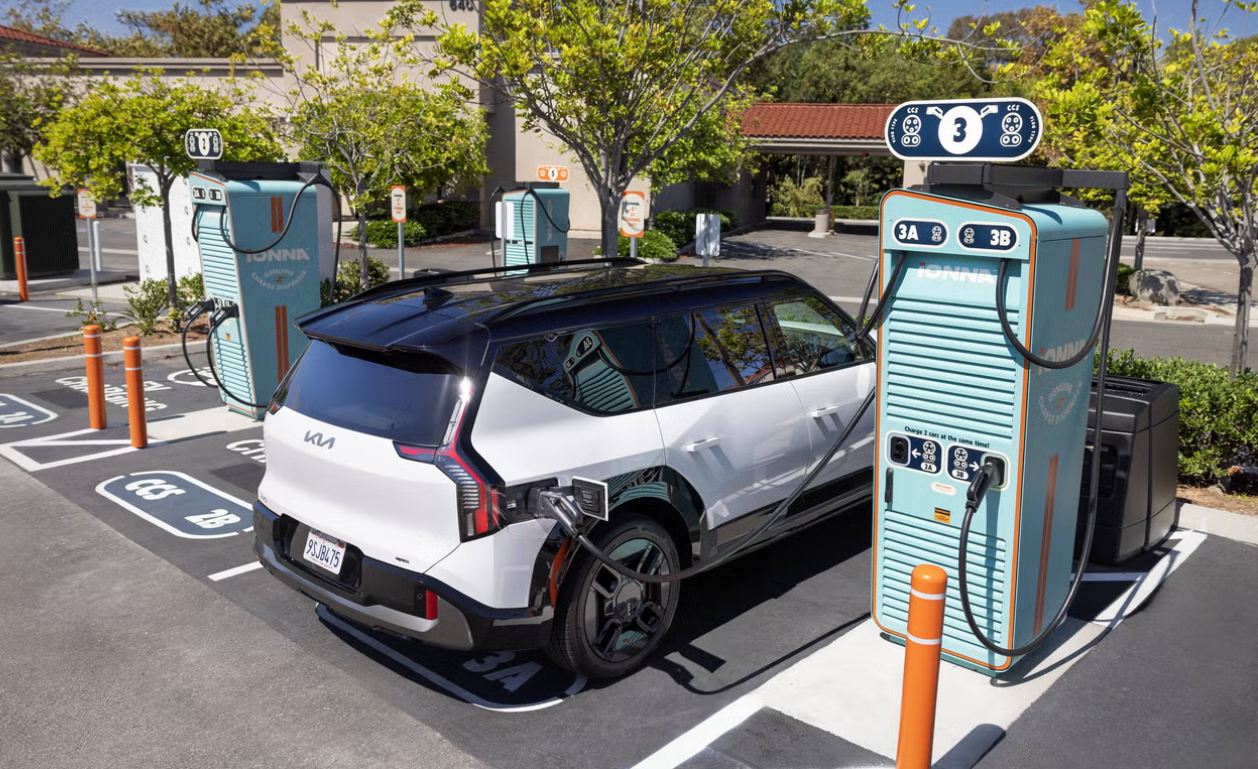
Electric vehicle charging varies by make, model, model year, and configuration. Your car’s charging port, maximum AC charging power, DC fast-charging capability, and adapter requirements all affect where and how you can recharge.
This guide helps you find the right electric vehicle charging information for your specific model. Use the vehicle directory on this page to navigate to a dedicated charging guide, where available, and learn about home charging, public charging stations, compatible connectors, charging speeds, and manufacturer-specific recommendations.
If you cannot find your exact vehicle, use the official resources linked below and verify the details in your owner’s manual before purchasing charging equipment or planning a trip.
Find an EV Charging Guide by Make and Model
Choose your vehicle’s manufacturer and then select the model that matches your car. Pay attention to the model year and trim, as charging specifications may change between versions.
The directory should display only vehicle-specific guides that have been published and are available on this website. Each model entry should link directly to its corresponding charging guide.
When searching, confirm that the guide matches your vehicle’s model year and configuration. A guide for a similarly named vehicle may not cover the same charging hardware, power limits, or compatibility requirements.
What You’ll Find in Each Vehicle-Specific Charging Guide
Each guide is designed to answer practical questions about charging a particular electric vehicle. The details depend on the manufacturer’s published specifications and the vehicle version covered by the article.
Charging Ports and Connector Compatibility
Find out which connector your vehicle uses for AC charging and DC fast charging, whether the two connections differ, and whether an approved adapter is needed.
In the United States, drivers may encounter J1772, CCS1, SAE J3400 (associated with NACS), and CHAdeMO connectors. Not every connector works with every vehicle, and adapter compatibility depends on the specific charging application.
The Joint Office of Energy and Transportation explains that the transition toward SAE J3400 means drivers must pay attention to their vehicle’s connector, charging equipment, and any required adapter.
Home Charging Options
Learn whether your vehicle supports Level 1 charging from a suitable 120-volt household outlet and Level 2 charging from a suitable higher-voltage electrical circuit.
A vehicle-specific guide should explain the maximum AC charging power supported by that model and how this affects the choice of a home charger.
A charger with a higher power rating will not necessarily charge your car faster if the vehicle’s onboard charging system has a lower limit.
DC Fast Charging
Find information about your vehicle’s DC fast-charging capability, supported connectors, and relevant manufacturer recommendations.
A fast charger’s advertised power rating does not guarantee that every vehicle will receive that amount of power. Battery temperature, starting charge level, vehicle limits, and charging-station output can all affect charging performance.
Where available, a dedicated guide should explain manufacturer-published charging-time estimates and the conditions associated with them.
Adapters and Public Charging Networks
Some vehicles can use additional charging stations through an approved adapter. However, an adapter that supports one charging application may not support another.
The relevant guide should explain which adapters the manufacturer supports, which charging standards they connect, and any restrictions that apply to the vehicle or charging network.
Do not assume that a connector will work safely merely because the plug physically fits. Check the manufacturer’s instructions and the charging provider’s compatibility information.
Charging Settings and Everyday Use
Depending on the vehicle, a dedicated guide may cover scheduled charging, daily charge limits, battery preconditioning, charging-port operation, and methods for monitoring a charging session.
These features can vary by manufacturer, model year, trim, and software version. Follow the instructions that apply to your exact vehicle rather than relying on generic advice.
Why Charging Specifications Differ Between EV Models
Two electric cars connected to the same charging station may charge at different speeds. This is because the vehicle’s charging hardware determines how much power it can accept, even when the station can provide more.
The model year matters, too. Manufacturers may change charging connectors, onboard charger capabilities, software functions, and adapter compatibility as vehicles are updated.
For example, a vehicle that supports a particular maximum AC charging power may be unable to use the full output of a more powerful home charger. Similarly, access to a DC fast-charging network may depend on the vehicle’s charging port, approved adapters, manufacturer arrangements, and the capabilities of the specific station.
This is why vehicle-specific charging guides should identify their coverage clearly, including applicable model years and any meaningful differences between trims.
Charging Guides for Different Types of Electric Vehicles
Not every vehicle with an electric motor has the same charging requirements. Identifying your vehicle’s powertrain type helps you find the correct guidance.
Battery-Electric Vehicles
Battery-electric vehicles (BEVs) run on electricity and must be plugged in to recharge their traction batteries.
Their charging guides should explain home charging equipment, compatible connectors, public fast-charging options, and the vehicle’s published charging specifications.
Plug-In Hybrid Electric Vehicles
Plug-in hybrid electric vehicles (PHEVs) combine a rechargeable battery and electric motor with an internal combustion engine.
Many plug-in hybrids support AC charging but do not support DC fast charging. A PHEV guide should therefore identify the actual charging options supported by that model rather than assuming that every electric-drive vehicle can use the same charging stations.
Conventional Hybrid Vehicles
Conventional hybrids generally recharge their batteries through regenerative braking and their engines rather than through an external charging cable. They do not ordinarily require a plug-in charging guide.
If you are uncertain whether your vehicle is a plug-in hybrid or a conventional hybrid, check its official specifications or owner’s manual.
How to Find the Correct Charging Information for Your Vehicle
Before following charging instructions, confirm these details:
- Make and model: Make sure the guide covers the exact vehicle you own.
- Model year: Confirm the year because charging hardware and compatibility can change.
- Trim or configuration: Check whether your version has different charging capabilities.
- Charging port: Identify the vehicle’s inlet and any required manufacturer-approved adapter.
- Charging power: Distinguish maximum AC charging capability from DC fast-charging capability.
- Manufacturer guidance: Consult the owner’s manual if the guide does not address your exact configuration.
These checks are especially important when buying a home charger, using an adapter, selecting a public charging network, or planning a long trip.
What If Your Vehicle Does Not Have a Dedicated Guide Yet?
If a guide for your exact model is not available in the directory, start with the manufacturer’s official support resources and owner’s manual.
The U.S. Department of Energy’s Electric Vehicles for Consumers guide explains general EV charging concepts and connector options.
For connector and adapter compatibility, consult the Joint Office of Energy and Transportation’s charging connector guide and adapter compatibility guidance.
These resources provide useful general information, but the exact vehicle specifications should be verified through its manufacturer.
Frequently Asked Questions About EV Charging by Vehicle
Why do I need a charging guide for my specific EV model?
A model-specific guide helps you identify the charging connectors, AC charging limits, DC fast-charging capabilities, approved adapters, and charging settings relevant to your car. These details can vary by manufacturer and model year.
Can all electric cars use the same home charger?
No. The charger must be compatible with your vehicle’s connector and electrical requirements. Charging speed is also limited by the vehicle’s onboard AC charging capability.
Can every EV use Tesla Superchargers?
No. Access depends on the vehicle, charging port, model-year eligibility, charging-network arrangements, and any required approved adapter. Verify compatibility with both the manufacturer and the charging network before relying on a particular location.
Does a newer EV model year always charge faster?
No. A newer model may have updated charging hardware or software, but it does not automatically charge faster. Compare the published specifications for the exact model years and configurations.
Where can I find my EV’s maximum charging speed?
Check the manufacturer’s official specifications or owner’s manual. Look separately for AC charging capability and DC fast-charging capability because they describe different charging methods. Actual performance can be lower than the maximum published rate.
Are charging adapters interchangeable between vehicles?
No. Compatibility depends on the vehicle, charger, connector standards, charging direction, and manufacturer approval. Use only adapters approved for the intended application and follow the associated instructions.
Find the Right Charging Guide for Your EV
The most useful EV charging information is information that matches your particular vehicle.
Start with the make, model, model year, and trim. Then use the dedicated guide, where available, to understand home charging, public charging options, connector compatibility, charging speeds, and manufacturer-specific requirements.
This directory is designed to connect general charging questions with more detailed, vehicle-specific guidance as the collection grows.