
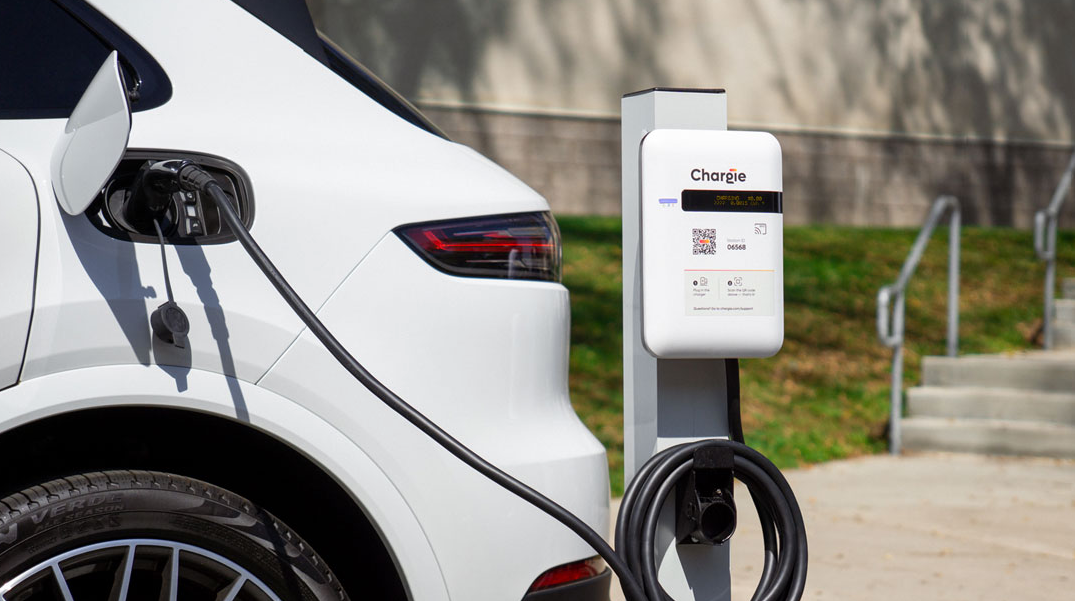
A Level 2 EV charger is a home or public charging device that supplies an electric vehicle with higher-voltage alternating current (AC) electricity. In the United States, residential Level 2 charging typically uses a 240-volt circuit and can replenish substantially more driving range per hour than a standard 120-volt Level 1 outlet.
For many EV owners, a Level 2 home charger offers a convenient way to recharge overnight, prepare for daily commutes, and reduce dependence on public fast-charging stations. However, charging performance depends on more than the charger’s advertised power. Your vehicle’s charging limit, your home’s electrical capacity, and the connector used all matter.
This guide explains how Level 2 charging works, how to compare power ratings, which connectors to consider, what installation involves, and what to check before buying a Level 2 EV home charger.
What Is a Level 2 EV Charger?
A Level 2 EV charger is charging equipment that supplies electricity to an electric vehicle using higher-voltage AC power than Level 1 charging.
In residential installations across the United States, Level 2 equipment typically uses 240-volt electrical service. Commercial locations commonly use 208 volts. Level 2 charging is available at homes, workplaces, parking facilities, hotels, and other destinations.
Technically, the equipment commonly called an EV charger is an electric vehicle supply equipment (EVSE) unit. It provides controlled power delivery and safety functions, while the vehicle’s onboard charger converts AC electricity into the DC electricity that the battery stores.
A Level 2 setup generally includes:
- A wall-mounted or pedestal charging unit.
- A charging cable and connector compatible with the vehicle.
- A suitable electrical circuit and protective equipment.
- A charging port on the vehicle.
Some units connect directly to a home’s electrical wiring, while others use a compatible 240-volt receptacle.
Level 1 vs. Level 2 vs. DC Fast Charging
Level 2 is faster than Level 1 but serves a different purpose from DC fast charging.
| Feature | Level 1 | Level 2 | DC fast charging |
|---|---|---|---|
| Typical U.S. power source | 120V AC | 240V residential AC | High-power DC equipment |
| Common location | Home | Home, workplace, public destinations | Public fast-charging stations |
| Charging speed | Slow | Moderate to fast for overnight charging | Fastest of the three |
| Installation needs | Suitable household outlet and compatible equipment | Often a dedicated circuit and professional installation | Specialized charging infrastructure |
| Best suited for | Short daily trips and some plug-in hybrids | Home charging, commuting, and destination charging | Road trips and rapid charging stops |
The U.S. Environmental Protection Agency estimates that Level 2 charging can add roughly 25–40 miles of driving range per hour under suitable conditions. Actual results vary by vehicle, charging power, efficiency, and battery conditions.
For many households, the advantage of Level 2 is that it can replenish a useful amount of driving range while the car is parked overnight.
Level 2 EV Charger Power: Volts, Amps, and Kilowatts
Understanding electrical ratings helps you compare chargers without paying for power your vehicle or property cannot use.
Three terms are particularly important:
Volts (V): Electrical potential. Residential Level 2 equipment in the United States commonly uses 240 volts.
Amps (A): The amount of electrical current flowing to the vehicle.
Kilowatts (kW): A measure of charging power. At a given voltage, higher current generally means higher power.
For a simplified calculation:
Power (kW) = Voltage (V) × Current (A) ÷ 1,000
At 240 volts, a 32-amp Level 2 charger can provide approximately 7.7 kW. A 48-amp charger can provide approximately 11.5 kW, assuming the equipment and supply deliver their rated output.
Common Level 2 Charger Power Ratings
The following figures illustrate typical power levels at 240 volts. The circuit ratings are common examples using the U.S. continuous-load sizing principle; the actual installation must comply with the applicable electrical code and equipment instructions.
| Charging current | Approximate output at 240V | Typical minimum circuit rating |
|---|---|---|
| 16A | 3.8 kW | 20A |
| 24A | 5.8 kW | 30A |
| 32A | 7.7 kW | 40A |
| 40A | 9.6 kW | 50A |
| 48A | 11.5 kW | 60A |
EV charging is generally treated as a continuous electrical load. This is why the circuit must be sized above the charger’s maximum continuous current, rather than simply matching the amperage printed on the unit.
For example, a 48-amp charging load commonly requires a 60-amp circuit. A 60-amp breaker does not mean the charger continuously delivers 60 amps to the vehicle.
These figures are for understanding equipment specifications, not instructions to install or modify household wiring. A qualified electrician should determine the correct circuit, conductors, breaker, grounding, protection, and installation method for the property.
Does a Higher-Amp Level 2 Charger Always Charge Faster?
No. The vehicle’s onboard charger limits the AC power it can accept.
Suppose one EV can accept 7.7 kW of AC charging power. Connecting it to an 11.5-kW Level 2 charger does not automatically make it charge at 11.5 kW. The vehicle remains limited by its own charging capability.
A more powerful charger may still be useful if you plan to own another compatible vehicle later, have more than one EV, or expect higher charging needs in the future. However, the extra capacity should be weighed against the installation cost and available electrical supply.
Check the vehicle’s owner’s manual or official specifications for its maximum AC charging power before buying equipment.
How Fast Is a Level 2 EV Charger?
Level 2 charging speed depends on the available power and how efficiently the vehicle converts that power into usable battery energy.
For many EVs, a Level 2 charger can add around 25–40 miles of range per hour when the vehicle and charger can use sufficient power. Lower-powered installations or less efficient vehicles may add less range in the same period.
Three factors explain most differences in charging speed.
1. Charger Output
A charger operating at 240 volts and 48 amps offers more power than one operating at 240 volts and 32 amps, assuming the vehicle can accept the additional electricity.
However, a charger may be configured to operate below its maximum rating to accommodate the property’s electrical supply.
2. Vehicle Charging Capability
The onboard charger determines how much AC electricity a vehicle can accept. Different trims and model years may have different limits, even within the same vehicle family.
Check the exact vehicle specifications rather than selecting a charger solely by its advertised maximum power.
3. Battery Size and Starting Charge Level
A vehicle with a larger battery generally needs more energy to replenish the same percentage of charge. Temperature, battery condition, and charging-system efficiency can also affect charging time.
A full-charge estimate should not be calculated by dividing battery capacity by charger power alone without accounting for these factors and the possibility of reduced charging power.
For a practical estimate, compare the energy your car uses on an ordinary day with the amount of time it spends parked at home. The objective is to recover enough energy for your actual driving needs, not necessarily to recharge the battery from empty every night.
Level 2 EV Charger Connectors and Vehicle Compatibility
Before choosing a Level 2 charger, confirm that its connector matches your vehicle or that an explicitly compatible adapter is available.
Two connector standards are especially important for AC charging in the United States: SAE J1772 and SAE J3400, commonly associated with NACS.
J1772
J1772 has been widely used for AC charging in the U.S. market. Many home Level 2 chargers use a J1772 connector, and many EVs have compatible charging inlets.
Some vehicles with different charging ports can use a compatible J1772 charger through an approved adapter, subject to the manufacturer’s compatibility requirements.
SAE J3400 / NACS
SAE J3400 is a standardized connector based on the North American Charging Standard design. It supports AC charging as well as DC charging when used with compatible equipment.
Vehicles and chargers are transitioning between connector types, so the correct connection depends on the vehicle’s exact charging port and the equipment installed at the property.
Do You Need an Adapter?
Sometimes. An adapter may allow your vehicle to connect to compatible charging equipment that uses a different connector.
However, adapters are not universally interchangeable. An adapter intended for AC charging should not be assumed to support DC fast charging, and an adapter suitable for one vehicle may not be approved for another.
The U.S. Joint Office of Energy and Transportation advises drivers to verify compatibility and use manufacturer-provided adapters for the intended vehicle and application.
Before buying a Level 2 home charger, check the vehicle’s owner’s manual, the charger’s connector specification, and any required adapter.
Plug-In vs. Hardwired Level 2 Home Chargers
Level 2 home chargers are commonly installed in one of two ways: through a suitable 240-volt receptacle or by connecting the equipment directly to the home’s electrical system.
The best option depends on the property’s wiring, local electrical requirements, equipment design, and installation preferences.
Plug-In Level 2 Chargers
A plug-in charger connects to a compatible 240-volt outlet. Common receptacle types used for some residential chargers include NEMA 14-50 and NEMA 6-50.
Potential advantages include easier removal or replacement of compatible equipment and the ability to use an existing suitable receptacle.
However, an outlet that physically fits the charging plug is not automatically suitable for continuous EV charging. Its rating, wiring, circuit protection, condition, and compatibility must be assessed. The receptacle and installation must also meet the requirements for the particular equipment.
Do not assume an existing outlet used for a clothes dryer or other appliance can be shared with an EV charger without professional assessment.
Hardwired Level 2 Chargers
A hardwired charger connects directly to the home’s electrical wiring rather than plugging into a receptacle.
Potential advantages include a permanent installation and fewer plug-and-receptacle connections. Depending on the charger and site, hardwiring may also simplify compliance with certain installation requirements.
A hardwired unit requires appropriate electrical installation. The contractor must select the correct circuit and wiring and install the equipment according to its listing, instructions, and applicable local code.
Neither connection method is automatically best for every property. Compare the equipment requirements, local regulations, available electrical capacity, and total installation cost.
How to Install a Level 2 EV Charger at Home
Installing Level 2 charging equipment involves more than mounting a unit on a wall. The home’s electrical system must be able to support the sustained load safely.
Check Electrical Panel Capacity
A qualified electrician can assess whether the home’s electrical service and panel have enough capacity for the proposed charger.
Some properties can accommodate a new charging circuit without major changes. Others may require load management, additional electrical work, or a service upgrade.
Do not assume an unused breaker position means sufficient electrical capacity is available. Physical space in a panel and the ability of the service to support additional load are different questions.
Choose the Installation Location
The charger should be positioned near where the vehicle is normally parked, allowing the cable to reach the charging inlet without being stretched or routed across a hazardous walkway.
For outdoor installations, choose equipment explicitly rated for outdoor use. Protect cables and connections from physical damage, and follow the manufacturer’s requirements for mounting, weather exposure, and maintenance.
Check Permits and Local Codes
Installation requirements depend on the jurisdiction, equipment, property type, and applicable electrical code. A permit or inspection may be required.
Ask the installer to explain which approvals apply and whether they are included in the quotation.
Use Properly Certified Equipment
Choose a charger that is listed or certified by a nationally recognized testing laboratory, such as UL or another appropriate testing organization. Check the exact product model and certification rather than relying only on marketing claims.
ENERGY STAR certification can also be useful when comparing eligible energy-efficient chargers, but safety certification and energy-efficiency labeling are not the same thing.
For additional guidance, consult the U.S. Department of Energy’s guide to charging electric vehicles at home and the U.S. Fire Administration’s EV charging safety recommendations.
What to Look for When Buying a Level 2 EV Charger
Comparing a few core specifications can help you avoid paying for unnecessary power or choosing equipment that does not suit your installation.
1. Charging Amperage and Power
Choose a charger that matches your daily driving requirements, your vehicle’s AC charging limit, and your home’s available electrical capacity.
An adjustable-current model can offer flexibility if the equipment supports configuring the output for the installed circuit. Any configuration must match the electrician’s installation and the manufacturer’s instructions.
2. Connector Type
Verify whether your vehicle uses J1772 or J3400/NACS for AC charging. If an adapter is required, make sure it is approved for the exact use case.
3. Cable Length
The cable should reach your vehicle’s charging inlet from the planned mounting location without tension. Consider where the charging port sits on your car and whether the unit will serve more than one parking position.
4. Plug-In or Hardwired Installation
Choose the installation method based on the property’s electrical setup, local requirements, the equipment’s specifications, and the installer’s recommendations.
Include electrical work in your budget rather than comparing chargers by equipment price alone.
5. Indoor or Outdoor Rating
If the charger will be installed outdoors, verify that the entire installation is suitable for the intended environment. Outdoor-rated equipment should be mounted according to the manufacturer’s instructions.
6. Smart Charging Features
Smart chargers may offer scheduling, energy monitoring, remote control, Wi-Fi connectivity, or integration with utility programs.
These features can be useful when your electricity rate varies by time of day or when you want to monitor charging usage. However, a basic charger may be sufficient if your main requirement is reliable overnight charging.
7. Safety Certification and Warranty
Check the model’s safety certification, warranty coverage, support options, and installation requirements. A cheaper unit is not necessarily better value if it lacks suitable certification, has a shorter warranty, or creates installation complications.
8. Total Installed Cost
The total project cost can include the charger, electrician’s labor, wiring, protective devices, permits, and possible panel or service upgrades.
Request an itemized estimate. A charger that costs less upfront might require a more expensive installation, while another setup may work with the available electrical supply with less additional work.
Frequently Asked Questions About Level 2 EV Chargers
Is a Level 2 EV charger worth it?
It can be worth the investment for drivers who need more charging speed than Level 1 can provide. Daily mileage, battery size, overnight parking time, installation cost, and available electrical capacity should determine whether the additional expense makes sense.
How many amps should a Level 2 home charger have?
Common residential options include 16-, 24-, 32-, 40-, and 48-amp output. The right rating depends on the vehicle’s AC charging limit, the circuit that can safely be installed, and your charging requirements. A qualified electrician should determine the compatible circuit and output configuration.
Does every Level 2 charger work with every EV?
No. Chargers must be compatible with the vehicle’s AC connector or a suitable approved adapter. Available charging power may also differ because vehicles have different onboard charger limits.
Can I install a Level 2 charger using a 240-volt outlet I already have?
Possibly, but the outlet and its circuit must be suitable for sustained EV charging and compatible with the charger’s electrical requirements. Have a qualified professional assess the installation before relying on an existing outlet.
Is hardwired installation better than plug-in charging?
Neither method is universally better. Hardwired installations can suit permanent installations, while compatible plug-in units may offer easier equipment replacement. Local code, equipment requirements, outlet condition, and installation cost determine the appropriate choice.
Can a Level 2 charger be installed outside?
Yes, provided that the charger and all installation components are rated and installed for outdoor use. Follow the manufacturer’s instructions for placement, weather exposure, cable protection, and maintenance.
Will an 11.5-kW Level 2 charger charge every EV at 11.5 kW?
No. The vehicle must support that level of AC charging, and the electrical supply must deliver the required power. A lower-powered onboard charger will limit the charging rate even when connected to a more powerful unit.
Final Verdict: Choosing the Right Level 2 EV Charger
A Level 2 EV charger can make home charging much more convenient, particularly for drivers with longer commutes, larger batteries, or limited time between trips. The right choice is not necessarily the charger with the highest amperage or most smart features.
Start with the vehicle’s maximum AC charging power and connector. Then assess the home’s electrical capacity, select a suitable installation method, check the safety certification, and compare the total installed cost.
When the charger, vehicle, and electrical installation are properly matched, Level 2 charging can provide a practical overnight charging setup without paying for capabilities your household cannot use.
Sources and Further Reading
- U.S. Department of Energy — Electric Vehicle Charging Stations
- U.S. Department of Energy — Charging Electric Vehicles at Home
- U.S. EPA — Getting Started with Home EV Charging
- U.S. Department of Transportation — Charger Types and Speeds
- Joint Office of Energy and Transportation — SAE J3400 Charging Connector
- Joint Office of Energy and Transportation — Connector and Adapter Compatibility
- U.S. Fire Administration — Electric Vehicle Fire Safety
- ENERGY STAR — Electric Vehicle Chargers