
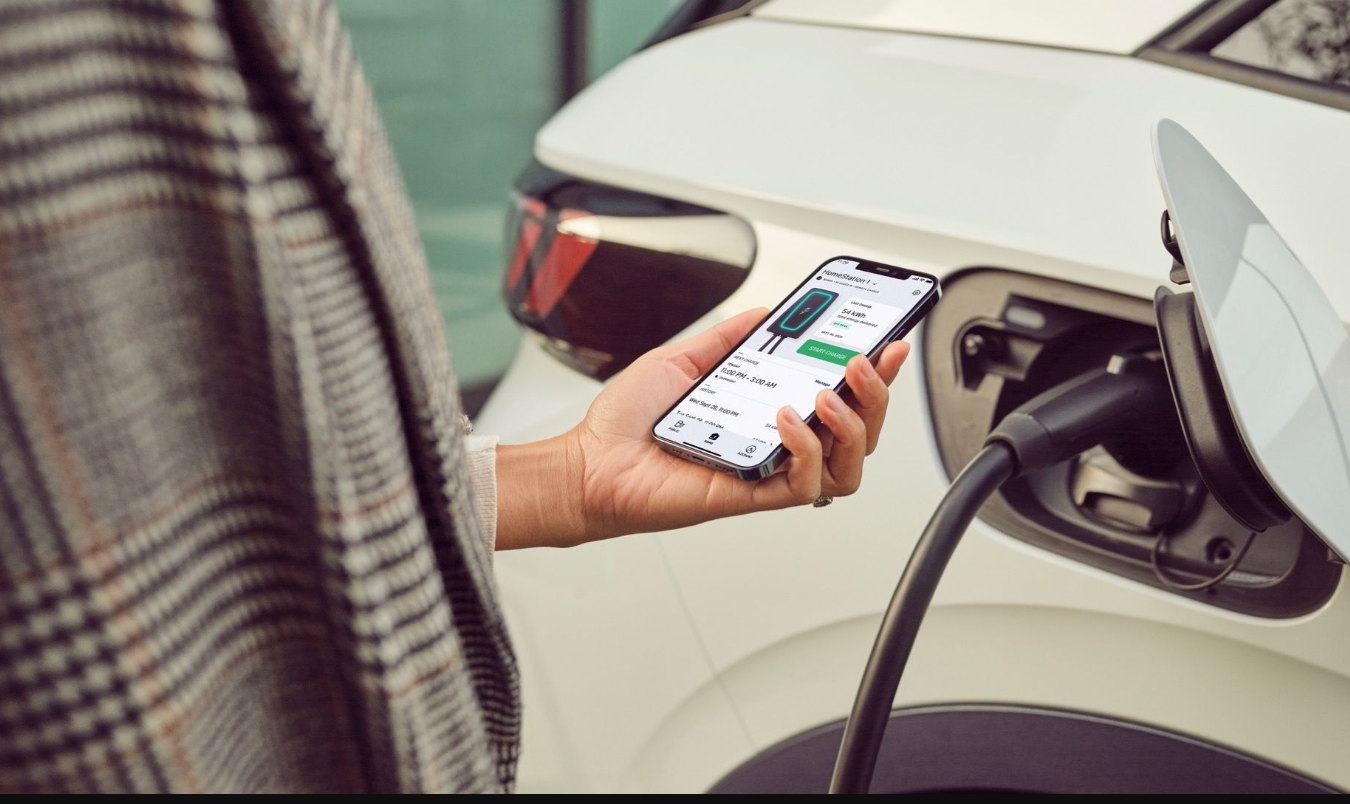
Home charging is one of the most convenient ways to own an electric vehicle (EV). Instead of making regular trips to a gas station or relying entirely on public charging networks, drivers can recharge their vehicles where they park, often overnight.
For many U.S. households, getting started is simpler than expected. A standard 120-volt outlet may provide enough energy for everyday driving, while a dedicated 240-volt Level 2 charger can add range more quickly. The right option depends on how far you drive, your vehicle’s charging capabilities, your home’s electrical system, and your budget.
This guide explains how home EV charging works, what equipment you need, how to estimate electricity costs, and what to consider before installing a charger.
What Is Home EV Charging?
Home EV charging means replenishing an electric car’s battery using electricity supplied at your residence. Most residential setups use alternating current (AC) charging equipment, commonly referred to as Level 1 or Level 2 charging.
According to the U.S. Department of Energy’s Alternative Fuels Data Center, many EV owners charge overnight at home. Depending on their driving needs, they can use a Level 1 charging cord or install a Level 2 charging unit.
The main advantages of home charging include:
- Convenience: Charge while your vehicle is parked, including overnight.
- Predictable costs: Estimate energy expenses using your household electricity rate.
- Less dependence on public charging: Start many days with enough range for your planned trips.
- Potential savings: Home electricity can cost less per mile than public fast charging, depending on local rates and charging fees.
Home charging does not eliminate the need for public charging. Long journeys, unexpected trips, and households without convenient residential parking may still require workplace or public charging stations.
Which Electric Cars Can Be Charged at Home?
Most battery-electric vehicles (BEVs) and plug-in hybrid electric vehicles (PHEVs) sold in the United States can be charged using compatible residential AC charging equipment.
A battery-electric vehicle runs entirely on electricity. A plug-in hybrid has a rechargeable battery and an internal combustion engine, allowing it to use electricity for some driving before relying more heavily on its engine.
A conventional hybrid is different. Although it has an electric motor and battery, it generally recharges its battery through regenerative braking and its engine rather than an external charging cable. It does not need a home EV charger.
Before choosing equipment, verify these details in your vehicle’s owner’s manual:
- The type of charging connector the vehicle uses.
- Its maximum AC charging power.
- Whether a charging cable is included.
- Any manufacturer-specific charging requirements.
The vehicle’s maximum AC charging capability matters because a more powerful home charger cannot force a vehicle to accept electricity faster than its onboard charging system allows.
Level 1 vs. Level 2 Home Charging
The two main options for home EV charging in the United States are Level 1 and Level 2. The most important difference is how quickly each can replenish the battery.
| Feature | Level 1 | Level 2 |
|---|---|---|
| Typical residential voltage | 120 volts | 240 volts |
| Power source | Suitable household outlet and compatible charging cord | Dedicated 240-volt circuit and compatible charging equipment |
| Charging speed | Slower | Faster |
| Installation | May require no new equipment if a suitable outlet is already available | Usually requires professional electrical assessment and installation |
| Best suited for | Short daily trips and some plug-in hybrids | Longer commutes, larger batteries, and higher daily mileage |
| Upfront expense | Often lower | Higher because equipment and installation may be needed |
Actual charging speed depends on the vehicle, charging equipment, available electrical power, battery condition, and other factors. The U.S. Environmental Protection Agency provides estimates of approximately 3–5 miles of driving range per hour for Level 1 and 25–40 miles per hour for Level 2, but individual vehicles and setups can differ.
Level 1 Charging: Using a Standard Household Outlet
Level 1 charging uses a standard 120-volt household outlet and a compatible charging cord. Some EVs include a portable charging cord, although equipment supplied with the vehicle varies by model and year.
For someone who drives relatively few miles each day, Level 1 may provide enough energy overnight to replace the previous day’s use.
For example, a driver who travels a short distance to work and has several hours of parking time overnight may not need faster equipment. The key is whether the vehicle recovers enough range during its available charging window.
The limitation is charging speed. Replenishing a large battery from nearly empty can take a long time, making Level 1 less practical for high-mileage driving or for drivers who need to recover a large amount of range between trips.
Use an appropriate outlet and circuit that can safely handle the charging load. Do not assume an old, damaged, or heavily shared outlet is suitable simply because the plug fits.
Level 2 Charging: A Faster At-Home EV Charger
Level 2 charging uses 240-volt residential electrical service. It can replenish more energy within the same parking period, making it a common upgrade for households that drive more miles or own a battery-electric vehicle with a larger battery.
A Level 2 system typically consists of a charging unit mounted on a wall or pedestal, a cable and vehicle connector, and the electrical circuit that supplies the unit.
Installation may involve running wiring, adding a circuit, obtaining a permit, or upgrading electrical service. The exact requirements depend on the home’s existing electrical capacity and local regulations.
Level 2 can be particularly useful when:
- You regularly drive longer distances.
- Your car needs more energy than Level 1 can replenish overnight.
- More than one plug-in vehicle shares the household.
- You want greater flexibility between consecutive trips.
However, buying the highest-powered unit available is not automatically the right decision. The vehicle’s AC charging limit and the home’s electrical capacity may restrict the power that can actually be used.
Is a Home DC Fast Charger Necessary?
For most households, no. Residential charging is generally built around AC Level 1 or Level 2 equipment. DC fast charging uses substantially different equipment and infrastructure and is commonly found at public charging sites.
A well-matched Level 2 installation is sufficient for many owners who park at home overnight. The goal is to meet daily driving needs, not necessarily to recharge the battery as quickly as possible.
How to Choose the Right Home Chargers
Choosing between home chargers involves more than comparing advertised charging speeds. Equipment should work with your vehicle, suit your parking location, and operate within the limits of your electrical system.
1. Check the Vehicle Connector
The connector must match your vehicle’s charging port, either directly or through an explicitly compatible adapter.
In the U.S., SAE J1772 has been widely used for AC charging, while SAE J3400, associated with the North American Charging Standard (NACS), has also become relevant to newer vehicles and charging equipment.
Do not assume that every EV manufactured in a particular year uses the same connector. Check the exact model year, vehicle variant, and equipment compatibility before purchasing a charger.
2. Match the Charger to Your Driving Needs
Estimate how much range you use on an ordinary day and how many hours the vehicle is parked at home.
If your daily energy needs are modest, a compatible Level 1 setup might be sufficient. If you regularly need to replenish more energy overnight, Level 2 may be worth the additional expense.
Also check the vehicle’s maximum AC charging power. A unit with a higher power rating may offer flexibility for another compatible vehicle in the future, but it will not necessarily charge your current car faster.
3. Consider Cord Length and Installation Location
The charging cable should reach the vehicle’s charging port without being stretched, creating a tripping hazard, or crossing a frequently used walkway.
For an outdoor installation, choose equipment specifically rated for outdoor use and have it installed according to its instructions. The location should allow convenient access to the vehicle while protecting cables and equipment from avoidable damage.
4. Decide Whether Smart Features Matter
Some home chargers include Wi-Fi connectivity, energy monitoring, scheduling, and app-based controls. These features can help you review charging activity or schedule charging for cheaper electricity periods when your utility offers suitable time-of-use rates.
A basic charger may be sufficient if you only need reliable charging. A smart charger is worth considering if scheduled charging, household energy management, or utility programs would provide practical benefits.
Compare safety certification, warranty terms, installation requirements, and cable length alongside the advertised power rating. The U.S. Department of Energy recommends safety-certified equipment and qualified electrical contractors; ENERGY STAR-certified products can also be useful when comparing energy-efficient options.
How Much Does Home Charging Cost?
Home charging costs depend primarily on how much electricity the vehicle uses and the rate your utility charges. There is no single price that applies to every U.S. household.
Your total cost may include two separate categories:
- Running costs: Electricity consumed during charging, plus any applicable utility charges.
- Setup costs: Charging equipment, electrical labor, wiring, permits, and any necessary electrical panel or service upgrades.
Calculate Your Electricity Cost
A straightforward way to estimate a charging session is:
Charging cost = Electricity used in kWh × Electricity price per kWh
Suppose your vehicle draws 30 kilowatt-hours (kWh) from your home’s electricity supply and your applicable energy rate is $0.16 per kWh.
30 kWh × $0.16 = $4.80
This is an illustrative calculation, not a quoted national electricity rate. Your actual bill may also reflect time-of-use pricing, taxes, other charges, or different consumption.
For a driving-cost comparison, you can use the vehicle’s energy consumption per 100 miles. If a vehicle uses 30 kWh per 100 miles and the electricity rate is $0.16 per kWh, its estimated energy cost is $4.80 per 100 miles using those assumptions.
Actual consumption varies with vehicle efficiency, weather, speed, terrain, and driving habits. Energy drawn from the grid may also differ from energy stored in the battery because charging is not perfectly efficient.
How Much Does a Home Charger Cost?
The Department of Energy’s Alternative Fuels Data Center lists a broad indicative range of approximately $500–$4,000 for Level 2 charging equipment before installation and incentives. This is not a guaranteed current quote for any particular product or property.
The installed price can be higher when the project requires long cable runs, electrical panel work, service upgrades, or additional permitting.
Before buying, request an itemized estimate that distinguishes equipment, labor, materials, permits, and any electrical upgrades. The cost of the installation can matter as much as the advertised price of the charger.
Can You Save Money by Charging at Night?
Possibly. Some utilities offer time-of-use electricity plans or special EV charging rates that make electricity cheaper during designated hours.
However, off-peak charging is not automatically cheaper for every household. Check your own utility’s tariff, including peak periods, program requirements, and any additional monthly charges.
A charger with scheduling features or a vehicle’s built-in charging schedule can help you take advantage of eligible lower-rate periods. Set the schedule according to your utility plan and daily driving requirements rather than assuming that all overnight hours have the same price.
Are Home Charging Incentives Available?
State, local, and utility programs may offer rebates or other assistance for qualifying residential charging projects. Availability and eligibility vary by location and can change over time.
There is an important current federal tax-credit limitation: as of October 2026, IRS guidance states that the individual Alternative Fuel Vehicle Refueling Property Credit applied to qualifying property placed in service through June 30, 2026. Do not assume a new home charger installation after that date qualifies for this federal credit.
Check current federal guidance, your state or local government, and your electricity provider before including any incentive in your budget.
How to Install a Home EV Charger Safely
A safe installation begins with the electrical system, not the charger purchase.
Check Your Home’s Electrical Capacity
A qualified electrician can assess whether your electrical panel and existing circuits can support the planned charging load. Older homes may need electrical work before a Level 2 unit can be installed.
Depending on local rules, permits and inspections may also be required. Ask the electrician which approvals apply to your property and whether the quote includes them.
Use Appropriate Charging Equipment and Wiring
Choose equipment that is certified by a recognized safety testing laboratory and follow the manufacturer’s installation and operating instructions.
For Level 2, have a qualified professional install the required circuit and charging equipment. For Level 1, verify that the outlet and circuit are suitable for the load.
Never use an extension cord or multiplug adapter to compensate for an inconvenient outlet location. Avoid damaged cables, loose connections, and improvised electrical setups.
Can You Charge an EV Outside in the Rain?
Yes, when the vehicle and charging equipment are designed for the conditions and installed and used according to the manufacturer’s instructions. Outdoor home charging is common, but outdoor installations require equipment rated for that use.
Keep connectors and equipment maintained, protect cables from physical damage, and stop using any charging component that shows signs of excessive wear or damage.
For additional precautions, consult the U.S. Fire Administration’s guidance on electric vehicle fire safety.
Home Charging for Renters and Apartment Residents
Living in an apartment or rental property does not automatically prevent you from owning an EV, but the charging arrangement may be more complicated than it is in a single-family home.
Start by checking whether you have a dedicated parking space, access to a suitable outlet, and permission to install equipment. Renters may need written approval from the property owner, while condominium or homeowners’ associations may have rules for shared areas and electrical work.
If installing a private charger is not practical, ask the property manager about shared charging, planned charging infrastructure, or a way to allocate electricity costs fairly. Workplace charging and nearby public stations can provide alternatives when home charging is unavailable.
Legal rights, approval processes, and installation requirements vary by state, locality, lease, and property arrangement. Confirm the rules that apply to your actual address before making installation plans.
How to Get Started With Home EV Charging
Use these steps to choose a practical setup without paying for unnecessary charging power.
- Estimate your driving needs. Review your typical daily mileage and how much time your car spends parked at home.
- Check your vehicle. Confirm its charging connector, maximum AC charging power, and any included charging equipment.
- Evaluate Level 1 first. If a suitable outlet and compatible cable are available, determine whether overnight charging will cover your normal driving.
- Get a Level 2 assessment if needed. Ask a qualified electrician to assess your panel, circuit requirements, equipment location, and permits.
- Compare total costs. Include equipment, installation, expected electricity use, and any verified utility programs.
- Plan safe everyday use. Choose a convenient cable route, use equipment suitable for the installation location, and follow the vehicle and charger’s instructions.
- Review your electricity tariff. Use off-peak scheduling only when it fits your actual utility plan.
The best home charging arrangement is the one that reliably meets your driving needs while remaining compatible with your vehicle, electrical system, and budget.
Frequently Asked Questions About Home Charging
Can I charge an electric car using a regular wall outlet?
Yes. Many plug-in vehicles support Level 1 charging through a standard 120-volt outlet and compatible charging equipment. The outlet and circuit must be suitable for sustained charging, and charging may be too slow for drivers with high daily mileage.
Is Level 1 charging enough for everyday driving?
It can be. Level 1 may work well for shorter daily trips when the car is parked long enough to replenish the energy used. Drivers who regularly cover more miles or need to recover a large amount of range overnight may benefit from Level 2.
How long does it take to charge an EV at home?
Charging time varies with battery capacity, starting charge level, vehicle charging limits, and available power. The U.S. Department of Transportation gives approximate ranges of 40–50 hours or more to charge a battery-electric vehicle to 80% from empty with Level 1 and 4–10 hours with Level 2. These are broad estimates, not promises for every vehicle.
Is home charging cheaper than public charging?
It can be, particularly where household electricity rates are relatively low and public charging includes additional fees. Compare your actual electricity tariff with the prices charged by the public stations you use. Installation costs should also be considered when evaluating the overall value of home charging.
Do I need to buy a home charger separately?
Not necessarily. Some EVs are supplied with a portable Level 1 charging cord, but the included equipment varies. A Level 2 setup generally requires compatible charging equipment and may require a professionally installed circuit.
Can I install a Level 2 charger myself?
Installation requirements depend on the equipment and local rules, but a Level 2 unit generally requires a suitable 240-volt circuit. A qualified electrician can determine the electrical requirements and complete the work in accordance with applicable codes and permitting requirements.
Can I charge my EV outside without a garage?
Yes, provided the charging equipment is rated for outdoor use and is installed and operated according to the manufacturer’s instructions. Cable placement and protection against physical damage should also be considered.
Which electric cars can be charged at home?
Most battery-electric vehicles and plug-in hybrids support compatible home AC charging. Conventional hybrids generally cannot be plugged in. Always verify the vehicle’s connector and charging specifications before purchasing equipment.
Final Thoughts
Home charging can make electric vehicle ownership more convenient by allowing drivers to replenish their batteries while parked at home. For some households, a suitable 120-volt outlet is enough. For others, a Level 2 charger provides the extra charging capacity needed for longer daily driving.
Before investing in home chargers, consider your mileage, vehicle specifications, electrical capacity, installation cost, and electricity tariff. A careful assessment of these factors will help you choose a setup that meets your needs without paying for capabilities you are unlikely to use.
Sources and Further Reading
- U.S. Department of Energy — Charging Electric Vehicles at Home
- U.S. Environmental Protection Agency — Getting Started with Home EV Charging
- U.S. Department of Transportation — Charger Types and Speeds
- ENERGY STAR — Electric Vehicle Chargers
- U.S. Fire Administration — Electric Vehicle Fire Safety
- Internal Revenue Service — Alternative Fuel Vehicle Refueling Property Credit for Individuals